
First Thought, Best Thought?
On spontaneity, embarrassment and solidarity.
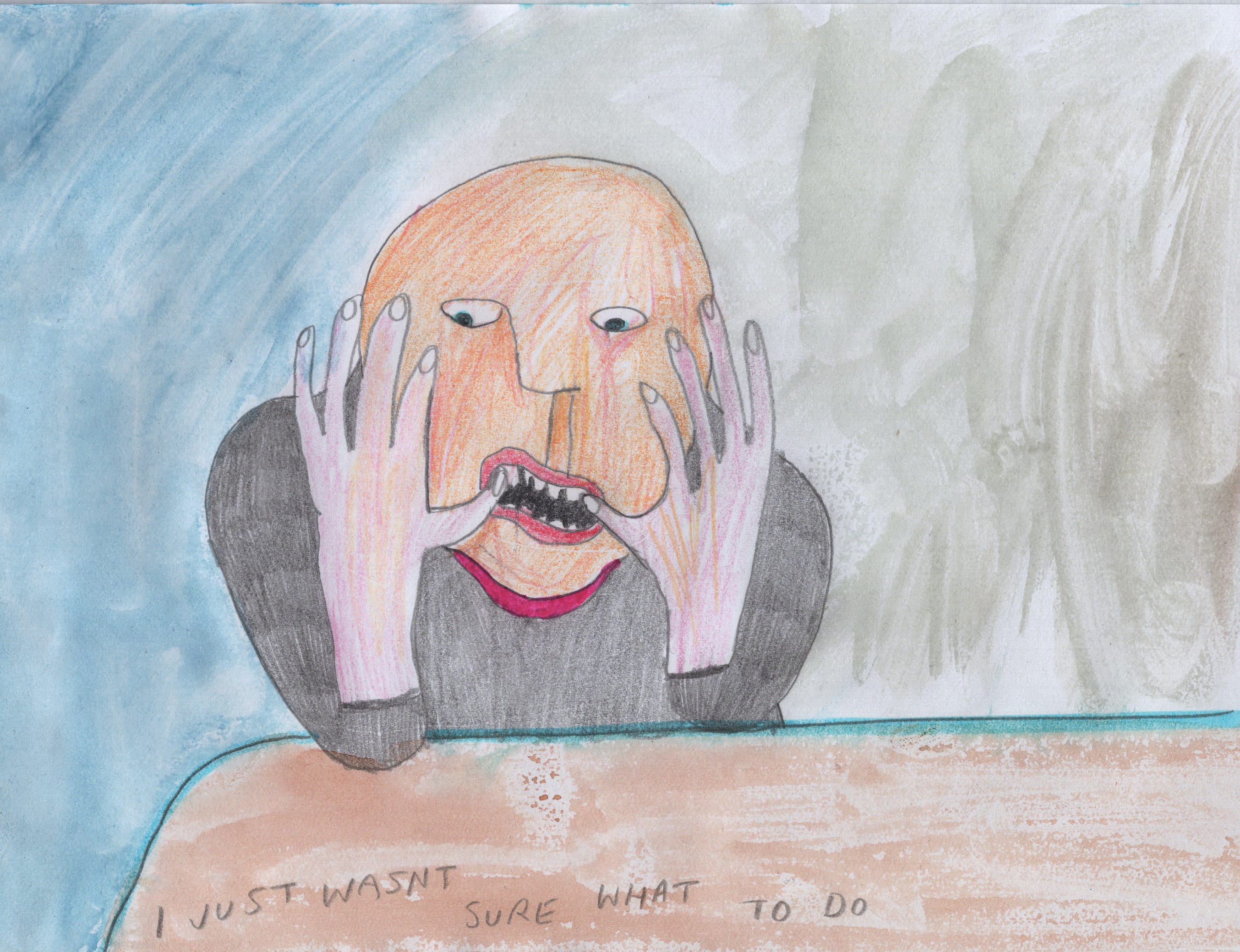
In my recent posts I have been writing about the creative process in experimental animation from my own perspective as a practitioner. I have talked about my improvisational approach and discussed a variety of methods that can help bypass the conscious mind.
Despite always having worked in this way, I have also often felt an element of hesitation and uncertainty about what kind of work to make. This doubt probably began around the time I was on my BA (in Fine Art) and starting to think of myself as ‘an artist’ but not fitting into what that apparently meant, as suggested by what was going on at the time - YBAs, video art and a lot of quite dry conceptual stuff. I wanted to know what was expected of me, but of course I never found out. In the absence of much in the way of guidance I resolved to abdicate my conscious mind’s worrying and questioning and try to just go with whatever came out, trying to tune in to something underneath the noise and chatter of my mind and its expectations, and see what would happen.
The phrase “First thought, best thought” is a kind of slogan for the creative mind, often attributed to the poet Allen Ginsberg, to encapsulate a spontaneous and fearless approach. Ginsberg in turn attributed it to the Tibetan Buddhist master Chögyam Trungpa. There’s another quote, from William Blake - “First Thought is Best in Art, Second in Other Matters”, which preceded it by some centuries. I don’t know when I first heard the phrase myself, but I guess it became embedded in my brain when the great Arthur Russell LP of that name came out in 2006.
First thought, best thought is a phrase that affirms my creative approach, but I often see it employed in a negative context. I have seen it used particularly in music reviews, to describe work as scattershot, in need of development, or to suggest a kind of arrogance or lack of hard work. Despite its relevance to my own working process, I’ve never found it entirely helpful as an aphorism1. I think this relates to a certain vagueness about what the word best means in the context of making art. I never really know if what I make is any good and I have never found any particularly convincing way of objectively measuring ‘quality’ in art.
But as a way to focus the mind on just getting stuff out and channeling a spontaneous approach, the phrase can be a helpful one. Given that I have been working in this way for so long it is annoying that I never quite manage to wholly commit with complete confidence to it. I suppose this is mainly because of my very mixed feelings about what comes out - things I don’t always like for one reason or another. It could be a matter of taste or aesthetic judgement - the work seems derivative or not what I want to make, or it could be personally revealing, embarrassing or even offensive. I guess this kind of stuff is inevitably going to come out if you work this way, and so how you filter this material then becomes an important part of the creative process. But it’s probably here that I run into the real doubt and questioning. I have never felt very sure about what to let out and what to keep back, what to develop further and what to throw away. Ideas of truth and honesty can compete with vague ego-driven ideas of how I want to be seen and thought about. What I think people will like contradicts with what I think people should like. What I think will get shown might not be what I actually want to make. It doesn’t help that I change how I feel about all of these things on a fairly regular basis.
Morris and the Other (2007) by Edwin Rostron
Morris and the Other was the first film I made whilst studying at the RCA, back in 2007. Thanks to the new-found technical knowledge I had gleaned (mainly from my classmates), I was suddenly able to make a pencil-drawn animation, having previously worked with collage animation and live action. This greatly opened up the scope of what I could do, both formally and in terms of content.
I wanted make a film which drew on a part of my creative output which I had generally overlooked and dismissed until then - the stupid little drawings I did compulsively, all the time, and which I often just threw away. Made at home, at work, while on the phone, on post-its, shopping lists, notebooks, these drawings were, and still are, just what flows out of me; often puerile, weird and crudely rendered. An ex-girlfriend (affectionately) called them my ‘little ugly men’. Anyone who lives or works with me has to put up with dozens of these characters floating around in my wake. They are alter egos I guess.